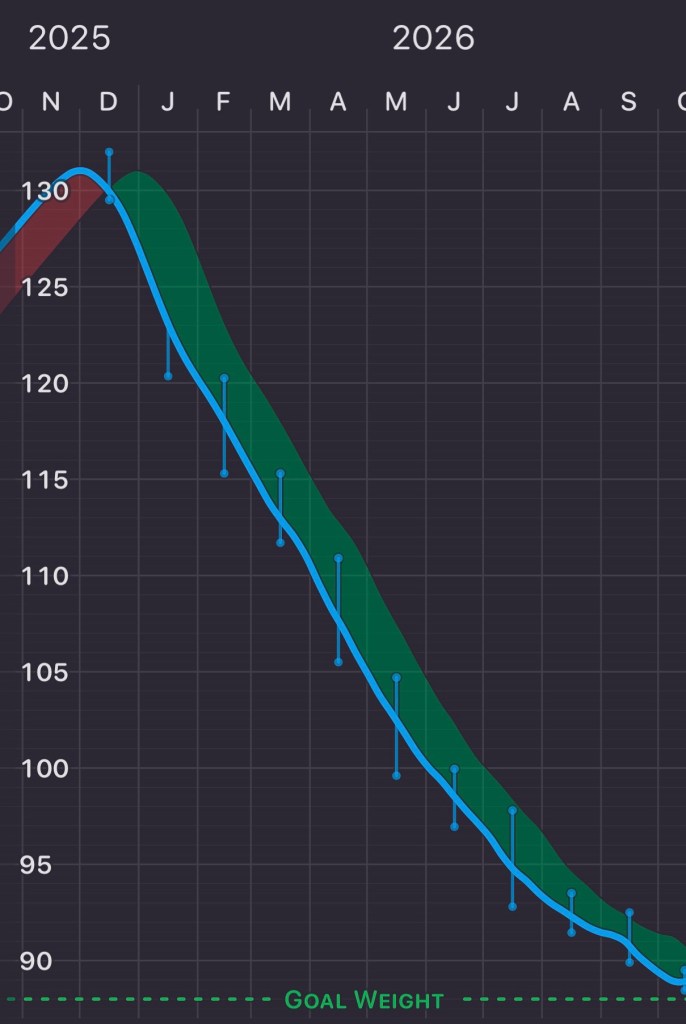
October has been another busy month on this journey, with plenty of miles covered, a return trip to Snowdonia, more time spent commuting to work on the bike, and a bit of a change in approach to training. After months of pushing hard to get the weight off and build my fitness back up, I’ve finally reached my target weight. That’s a milestone I’m incredibly pleased with, but it also means it’s time to adjust the plan slightly. The focus now is less about losing weight and more about maintaining what I’ve achieved, continuing to build my endurance, and making sure I’m in the best possible shape for the challenges ahead.
It feels a little strange to be saying that after spending so long focused on weight loss. For a considerable part of this journey, the numbers on the scales were the main measure of progress. Every pound lost was another step towards the goal, and the training was geared around getting there. Now that I’ve reached my target, the challenge is different. I need to maintain my weight, keep building a useful level of fitness, and find a sustainable balance between training hard enough to improve and allowing myself enough time to recover.
That last part is particularly important. There’s a temptation, once you start seeing progress, to keep pushing harder and harder. More miles, longer walks, bigger challenges. But progress isn’t always about doing more. Sometimes it’s about recognising what you’ve achieved, adjusting your expectations, and making sure you can keep going for the long haul. So, while I haven’t stopped training by any means, I have dialled things back a little and moved towards maintenance training. The aim is to keep the fitness I’ve built, improve gradually where I can, and avoid turning something positive into a constant battle against my own body.
Keeping the miles ticking over
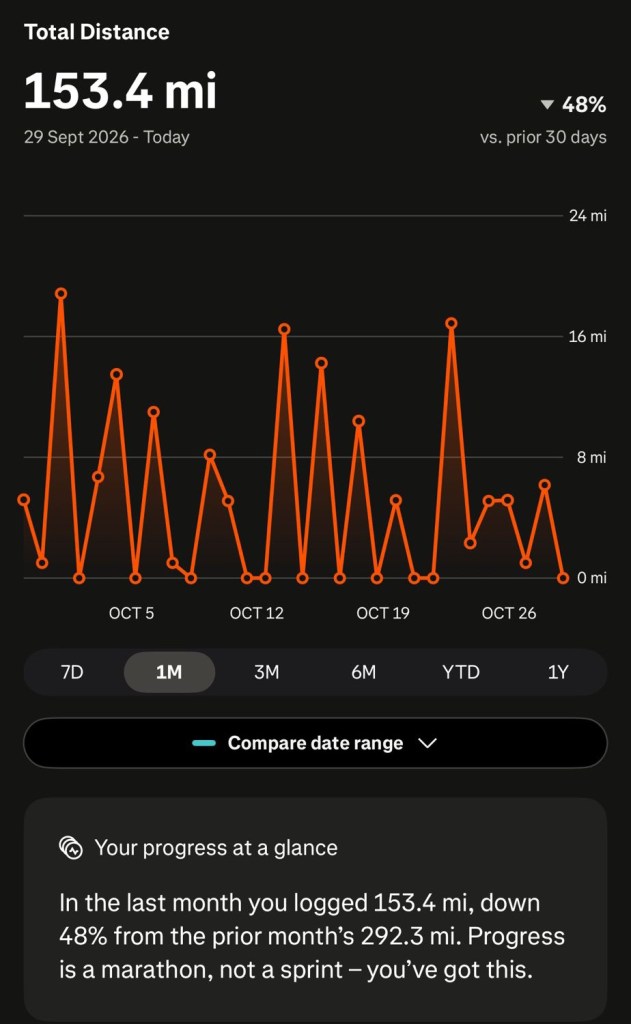
Looking at my Strava figures for October, I’ve logged 153.4 miles between 29 September and the end of the month. That’s down 48 per cent on the previous 30-day period, when I covered 292.3 miles. On paper, that might look like a significant drop, but there’s a reason for it. I’ve deliberately eased back a little now that I’m at target weight, and I’m trying to make my training more sustainable rather than chasing a bigger monthly total simply for the sake of it.
The daily figures show how varied the month has been. There have been some decent days out, some shorter sessions, and days when very little has gone into the mileage total at all. That’s the reality of fitting training around normal life. Work still needs doing, other commitments don’t disappear, and not every day is going to be an opportunity to head out for a long walk or ride.
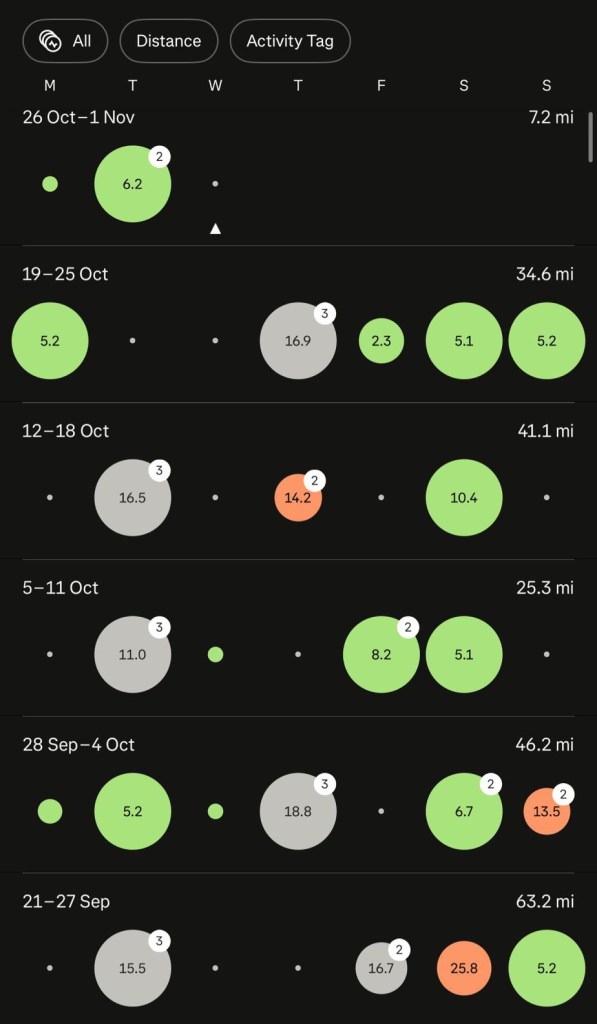
The weekly totals tell more of the story. The week beginning 21 September saw 63.2 miles recorded, followed by 46.2 miles for the week spanning 28 September to 4 October. The following week came in at 25.3 miles, before I recorded 41.1 miles between 12 and 18 October. The week beginning 19 October totalled 34.6 miles, with 7.2 miles recorded so far in the final week shown.
It’s a useful reminder that training isn’t always a straight line. Some weeks are busier than others, and some are naturally lighter. The important thing is the overall direction of travel, not whether every week beats the one before it. I’ve spent long enough working towards my target to know that consistency matters, but consistency doesn’t mean doing exactly the same thing every day. It means continuing to show up, adapting when necessary, and keeping the bigger objective in mind.
I’m also trying to be more sensible about what the figures actually mean. Strava is a useful way of keeping track of activity and seeing how much I’ve done, but the monthly total doesn’t tell the whole story. Distance is only one part of the picture. The effort involved, the terrain, the elevation gained, how I feel afterwards, and how well I recover are all important too. A relatively short walk over difficult ground can be considerably more demanding than a much longer outing on an easy route.
That lesson has become increasingly obvious as I’ve progressed through this journey. The aim isn’t simply to accumulate miles. It’s to build the kind of fitness that will be useful when I need it.
The commute still counts
One of the things that continues to contribute to my activity is commuting to work on the bike. It’s an effective way of building movement into the working week without having to find an entirely separate slot in the day for exercise.
There’s something satisfying about getting on the bike and making the journey under my own steam. It gives me a reason to get moving, adds to the weekly activity total, and helps keep cycling part of my routine rather than something I only do when I have a free day. It’s also a practical reminder that exercise doesn’t always have to involve a big training session or a dramatic challenge. Sometimes it’s simply about making a different choice for a journey I need to do anyway.
Those regular rides have their place alongside the longer walks and more demanding outings. They help maintain general fitness, keep the legs working, and contribute to the overall workload without every session needing to be an all-out effort.
Of course, commuting by bike isn’t always the same as heading out for a dedicated ride. The weather, the working day and the practicalities of getting from A to B all have an influence. But that’s precisely why I value it. It’s activity that fits into real life, and that matters if I’m going to keep this going over the long term.
The plan now is to continue using the bike as part of my routine while being realistic about the rest of my training. I don’t need to turn every journey into a personal challenge. The miles will add up, and the consistency is what counts.
Back to Snowdonia
One of the highlights of the month was returning to Snowdonia, or Eryri as it is increasingly known, for another reminder of just how rewarding—and demanding—mountain walking can be.
There is something about getting back into the mountains that puts everything into perspective. The training figures, the weight-loss milestones and the activity totals are useful ways of measuring progress, but they only tell part of the story. Being out on the hills is where a lot of that work gets put to the test.
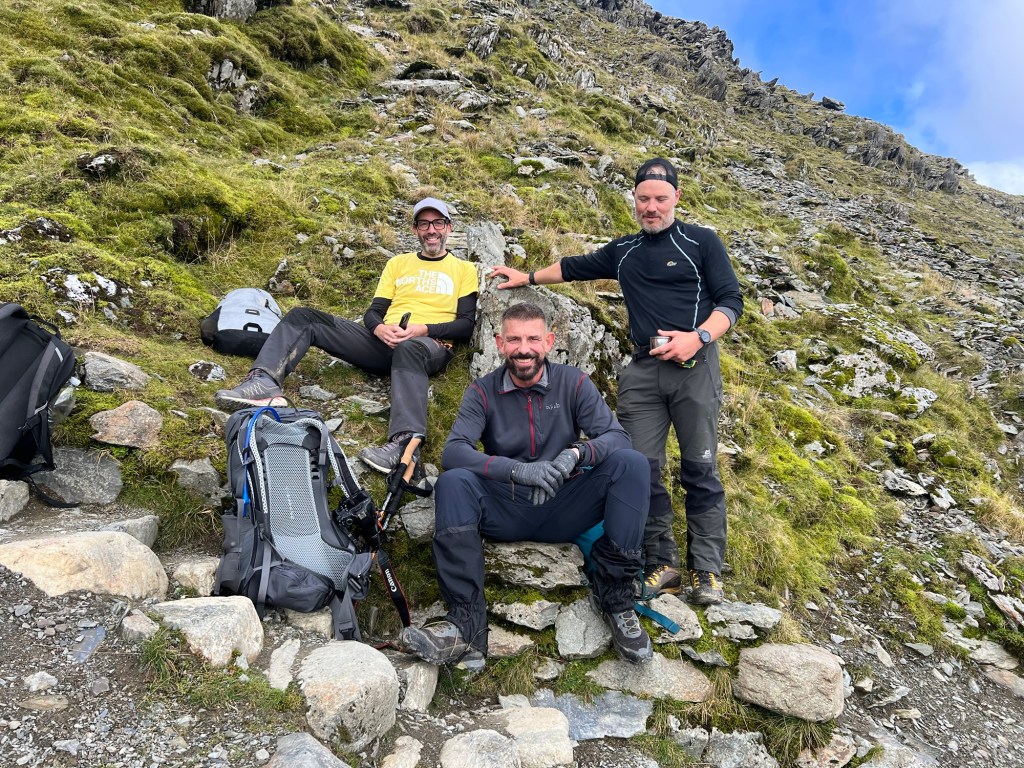
Our outing in the area, tackling six peaks in a demanding day, was a serious physical challenge. It left me with some fairly spectacular delayed-onset muscle soreness, particularly in my legs and shoulders. The legs were perhaps to be expected after a long day on the hills, but the shoulders were a reminder of just how much work walking poles can do over an extended period. They are useful pieces of kit, but they don’t mean the upper body gets an easy ride.
That experience reinforced an important lesson: being able to cover a decent distance is one thing, but being able to cope with prolonged effort, uneven terrain, repeated ascents and descents, and the cumulative strain of a long day is something else entirely.
Mountain walking places different demands on the body from everyday activity. The climbs test cardiovascular fitness and muscular endurance, while the descents can be particularly punishing on the legs. Add a loaded rucksack, changing weather and the need to keep concentrating on where you put your feet, and it becomes clear why preparation matters.
Returning to Snowdonia is therefore about more than simply getting another walk under my belt. It’s an opportunity to assess how far I’ve come, identify what still needs work, and enjoy the mountains with a better understanding of what I’m capable of.
It’s also a reminder that fitness has to be built for the activity you actually want to do. Cycling to work and logging regular walking miles are valuable, but they don’t completely replicate the demands of a long mountain day. If I want to be comfortable on challenging terrain, I need to keep getting out on challenging terrain, building up gradually and giving myself enough recovery time afterwards.
I’m pleased with the progress so far, but I’m not under any illusion that reaching my target weight means the work is finished. It simply means I’ve reached one important milestone. There are still skills to develop, endurance to build and plenty of hills to walk.
Reaching my target weight—and changing the plan
Reaching my target weight is a significant moment in this journey. It represents a lot of effort, persistence and changes to my lifestyle, and I’m proud to have got here.
But getting to a target and staying there are two different challenges. During the weight-loss phase, the goal was clear: keep moving in the right direction until I reached the number I’d set myself. Now the priority is to maintain that result while continuing to improve my fitness.
That means changing the way I think about training. I no longer need to approach every week as though I have to do more than the week before. I can concentrate on building a consistent routine, keeping active, enjoying the activities I’ve worked towards, and allowing recovery to be part of the plan rather than treating it as lost time.
I’ve dialled things back a little as a result. That isn’t giving up or losing motivation; it’s recognising that the objective has changed. There’s a difference between training to lose weight and training to maintain a healthy weight while developing the endurance needed for longer and more demanding adventures.
The temptation to keep chasing bigger numbers is understandable. When you can see the miles adding up, it’s easy to start treating every reduction in activity as a step backwards. But a lighter month doesn’t automatically mean a loss of fitness, particularly when it’s part of a deliberate change in approach.
What matters now is finding a routine I can maintain. I want to keep cycling, keep walking, keep heading into the hills and continue improving where it makes sense. I also want to be able to do those things without feeling that every session has to prove something.
There’s a lot to be said for learning when to push and when to ease off. I’m still working that out, but I think it’s an important part of making this journey last.
Looking beyond the scales
One of the biggest changes over the course of this journey has been the way I measure progress. Weight has been an obvious benchmark, but it isn’t the only one that matters.
Being able to get out for a walk, cover a distance that would once have seemed daunting, cycle to work, or take on a demanding mountain route are all achievements in their own right. They reflect changes in fitness, confidence and what I feel capable of doing.
The mountains have been particularly useful in that respect. They don’t care what the scales say. They demand that you keep moving, manage your effort, pay attention to the terrain and make sensible decisions. You can’t bluff your way up a steep climb, and you can’t ignore tired legs on the way down. The experience is a much more direct test of practical fitness than a number on a screen.
That’s why I want to keep walking and cycling even though I’ve reached my weight target. The aim is no longer simply to get lighter. It’s to become better prepared for the things I want to do.
I also want to make sure that the training remains enjoyable. There will always be days when the weather is miserable, motivation is lacking or work has taken more out of me than expected. That’s normal. The answer isn’t necessarily to force another session into the day. Sometimes it’s to take a rest, recover properly and come back ready for the next one.
If October has taught me anything, it’s that there is no need to treat every month as a competition against the previous one. Progress can mean doing less for a while, particularly when that change is deliberate and supports a bigger goal.
The road ahead
Looking forward, I want to keep building on what I’ve achieved without losing sight of why I started. The target weight has been reached, but there are still plenty of reasons to stay active.
The bike commute will remain part of the routine where practical, and I’ll continue to build walking into the week. I also want to keep returning to the hills, learning from each outing and gradually improving my ability to cope with longer days and more demanding routes.
The emphasis will be on consistency rather than trying to smash every previous record. I’ll still keep an eye on Strava, because it’s useful to see the miles and compare different periods, but I’m not going to let a monthly total dictate whether I feel I’ve had a successful month.
A successful month might mean covering a lot of ground. It might mean getting out regularly despite a busy working schedule. It might mean completing a challenging walk, recovering well and coming back ready for the next one. And sometimes it might simply mean recognising that I needed to take my foot off the accelerator for a while.
There is also something reassuring about having reached a point where the goal is maintenance rather than continued weight loss. It gives me the opportunity to concentrate more fully on building a sustainable lifestyle around the activities I enjoy and the challenges I want to take on.
I know there will be ups and downs. Weather, work and everyday life will all influence what I manage to do, and there will inevitably be periods when the mileage drops. That’s fine. The important thing is to keep going, make sensible adjustments and avoid losing sight of the bigger picture.
A thank you
Finally, I want to say a genuine thank you to everyone who has supported me along the way.
Whether you’ve followed the updates, offered encouragement, asked how things are going, joined me for a walk, or simply taken the time to read what I’ve been doing, I really do appreciate it. Support makes a difference, particularly during the stretches when progress feels slow or the effort involved is difficult to explain to anyone who hasn’t been through something similar.
It’s easy to focus on the individual targets and milestones, but the encouragement from other people has been an important part of the journey too. Knowing that people are interested, checking in and cheering me on helps keep things in perspective.
Reaching my target weight is something I’m proud of, but I see it as the end of one phase rather than the end of the journey. There’s more to come, more to learn and plenty more miles to cover.
So that’s October: a return to Snowdonia, the usual mix of cycling and walking, 153.4 miles recorded on Strava over the month, and a deliberate shift towards maintenance training now that I’ve reached my target weight.
The mileage is down, but that’s by design. I’m not giving up on the training; I’m adjusting it to suit the next stage. The aim is to stay fit, maintain the progress I’ve made, enjoy getting outdoors and continue preparing for whatever comes next.
Thanks again to everyone who has been part of the journey so far. There’s still a long road ahead, and I’m looking forward to seeing where it leads.
As always, love to you all.
Rich x

